Rising food prices, electricity bills, and school expenses are putting serious pressure on low-income families across Pakistan in 2026. For many households, the 8171 Ehsaas Program Rs.14,500 installment is not just assistance — it’s survival support.
However, thousands of eligible beneficiaries face delays simply because they don’t complete verification properly or their data isn’t updated in time. This detailed guide explains how the system works, who qualifies, how to verify, how to collect payment, and how to avoid common issues — with practical advice based on real ground situations.
What Is the 8171 Ehsaas Program in 2026?
The 8171 service operates under the supervision of the Benazir Income Support Programme (BISP), which manages financial assistance for vulnerable families.
In 2026, the quarterly installment has been revised to Rs.14,500 for eligible households under the Kafalat framework. The payment aims to:
-
Offset inflation impact
-
Support women-led households
-
Improve financial inclusion
-
Ensure transparent fund distribution
The assistance is disbursed after digital verification through the National Socio-Economic Registry (NSER).
Why the Rs.14,500 Installment Matters in 2026
Inflation trends in Pakistan have significantly impacted:
-
Wheat flour and cooking oil prices
-
Utility bills
-
Transportation costs
-
School-related expenses
For a family earning below Rs.35,000 monthly, this installment can cover:
| Expense Type | Approximate Coverage |
|---|---|
| Monthly groceries | 2–3 weeks |
| School fees (primary level) | 1–2 months |
| Electricity bill | 1–2 billing cycles |
| Emergency medical needs | Basic treatment |
The increased installment reflects updated cost-of-living realities.
Who Is Eligible for the 8171 Ehsaas Rs.14,500 Payment?
Eligibility is not random. It is determined through data-based poverty scoring under NSER.
Basic Eligibility Criteria
You may qualify if:
-
Your household income falls below the poverty threshold
-
You completed the Dynamic NSER Survey

-
You possess a valid CNIC issued by National Database and Registration Authority
-
No government employee is registered in your immediate family
-
You are not receiving duplicate federal aid
Priority Groups in 2026
-
Widows
-
Women-headed households
-
Persons with disabilities
-
Families affected by natural disasters
Important: If you were previously declared ineligible, you can request a re-survey at your nearest BISP Tehsil Office.
How to Verify 8171 Ehsaas Rs.14,500 Installment
Verification is mandatory before payment release.
There are two official methods:
Online CNIC Verification (8171 Web Portal)
Steps:
-
Visit the official 8171 web portal
-
Enter your 13-digit CNIC number
-
Complete the captcha
-
Submit to check eligibility and payment status
Best for: Urban users with internet access.
Expert Tip:
Use your own device or trusted internet source. Avoid third-party agents charging money for checking status — the service is free.
SMS Verification (For Rural & Offline Users)
Steps:
-
Open your mobile message app

-
Type your CNIC number (without dashes)
-
Send it to 8171
-
Wait for confirmation reply
Best for: Rural households or those without internet.
Important: Only send from your registered mobile number if possible.
Payment Collection Process in 2026
Once verified, payments can be collected through:
-
BISP Campsites
-
HBL Konnect agents
-
Bank Alfalah partner retailers
-
Selected ATM machines
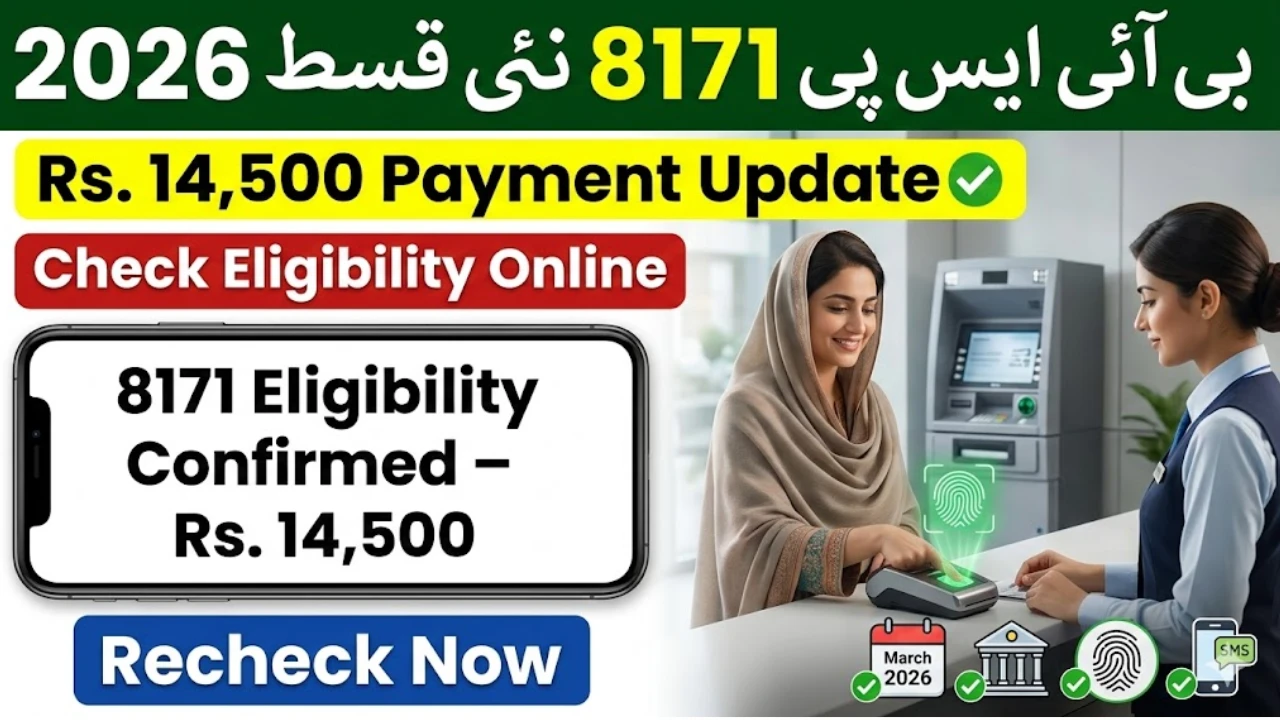
Biometric thumb verification is mandatory.
What to Bring?
-
Original CNIC
-
Registered mobile phone
-
Verification SMS (if received)
Common Problems & Practical Solutions
Here are real issues beneficiaries face — and how to solve them.
CNIC Not Found
Cause: Outdated NSER data
Solution: Visit BISP office and request Dynamic Survey update.
Biometric Failure
Cause: Worn fingerprints (common among elderly women)
Solution:
-
Visit NADRA for fingerprint update
-
Request alternate verification at BISP center

Payment Status “Under Verification”
Cause: Data cross-check in process
Solution: Wait 7–14 days before rechecking.
Marked Ineligible After Previous Eligibility
Cause:
-
Change in poverty score
-
Government job detected in household
-
Vehicle registration in family name
Solution: File a review request at Tehsil office.
Why 2026 Verification Is Stricter
The government has strengthened digital tracking to:
-
Eliminate duplicate beneficiaries
-
Prevent fraud
-
Improve transparency
-
Expand coverage to newly deserving families
The integration between BISP and NADRA databases has improved real-time verification.
This reduces corruption but requires accurate household data.
Pros and Cons of the 8171 Verification System
Pros
-
Easy SMS access nationwide
-
Transparent poverty scoring
-
Women-centered payments
-
Reduced middlemen involvement
Cons
-
Biometric failures in rural areas
-
Long queues at campsites

-
Delays due to survey backlog
-
Limited awareness in remote regions
Expert Advice to Avoid Payment Delays
-
Complete your Dynamic Survey update every 2 years.
-
Keep your mobile number active and registered.
-
Ensure CNIC details are updated after marriage or relocation.
-
Avoid paying agents — verification is free.
-
Check status early in the payment cycle.
FAQs – 8171 Ehsaas Program 2026
1. When will the Rs.14,500 installment be released in 2026?
Payments are issued quarterly after verification. Check your status through 8171 before visiting collection centers.
2. Can men receive the payment?
The program prioritizes women beneficiaries. Payments are typically issued in the name of the registered female household member.
3. What if I lost my CNIC?
You must apply for a replacement through NADRA before collecting funds.
4. Is there any registration fee?
No. Registration and verification are completely free.
5. Can I check eligibility without internet?
Yes. Send your CNIC number via SMS to 8171.
6. What is the Dynamic Survey?
It is an updated household poverty assessment conducted under NSER to reassess eligibility.
2026 Policy Insight: What’s Changing?
-
Expanded digital monitoring
-
Increased installment amount
-
Stronger biometric enforcement
-
Wider rural outreach camps
Government sources indicate continued digital expansion to reduce payment leakage and speed up processing.
Final Takeaway
The 8171 Ehsaas Program Rs.14,500 installment in 2026 is a crucial support system for low-income families navigating inflation and financial stress. But eligibility alone is not enough — verification is key.
If your data is updated and your CNIC is valid, the process is straightforward. Delays usually occur due to outdated records or biometric mismatches.
Verify early. Update your data. Avoid agents.
And ensure your family receives the support it deserves.