Every Ramadan, thousands of low-income families in Pakistan rely on government relief programs to manage rising food and utility costs. But many women — especially widows, divorced women, and those running households alone — often remain confused about whether they can apply independently.
Questions like “Can I apply if my husband is unemployed?”, “What if I’m a widow?”, or “Does NADRA record affect my eligibility?” are extremely common.
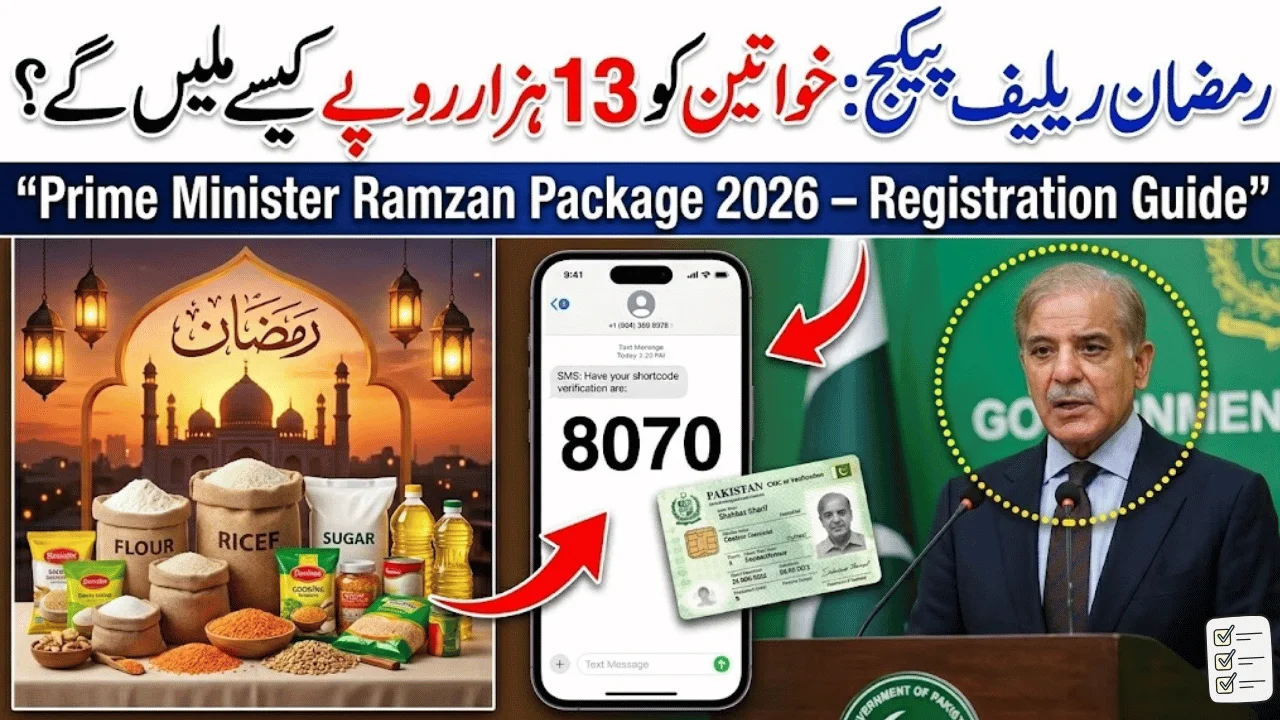
The Ramzan Relief Package 2026 aims to support vulnerable families, and women heading households are among the priority groups. However, approval depends on proper documentation, updated records, and eligibility checks through government databases.
This guide explains how women can qualify, apply, and avoid common mistakes when applying for the Ramzan Relief Package in 2026.
Can Women Apply for the Ramzan Relief Package 2026?
Yes. Women are fully eligible to apply if they meet the poverty criteria and household conditions set by the government.
You can apply if you fall into any of these categories:
-
Widow managing the household
-
Divorced or legally separated woman
-
Female head of household
-
Wife of an unemployed husband
-
Woman already registered in BISP programs
-
Low-income household meeting the poverty score requirement
However, the government system checks data through NADRA and the BISP database, so records must be accurate.
Why Female Applicants Often Get Priority
Government welfare programs in Pakistan increasingly prioritize vulnerable women because they are statistically more likely to face financial hardship.
Women who may receive priority consideration include:
-
Widows with dependent children
-
Female-headed households
-
Disabled women
-
Elderly women without financial support
-
Beneficiaries of the BISP Kafalat Program
In many cases, women already receiving BISP support payments have a higher chance of being approved for Ramadan relief assistance.
Ramzan Relief Package for Widows
Widows are among the primary beneficiaries of social protection programs.
Eligibility Conditions for Widows
To qualify, the following conditions usually apply:
-
Husband’s death must be officially recorded

-
CNIC must show updated marital status
-
Household income should fall below the eligibility threshold
-
Valid CNIC and updated family record
Common Problems Widows Face
Many widows get rejected due to record mismatches.
Typical issues include:
| Problem | Why It Happens |
|---|---|
| Husband still appears active in records | Death not updated in NADRA |
| Family registration outdated | Household data not revised |
| Death certificate not linked | Official documentation missing |
Practical Solution
If you are a widow:
-
Visit the nearest NADRA office
-
Update marital status in your CNIC record
-
Update your Family Registration Certificate (FRC)
-
Visit a BISP center to complete a dynamic survey
This update significantly increases approval chances.
Can Divorced Women Apply for Ramzan Relief?
Yes. Divorced women can apply independently once their records are officially updated.
Requirements for Divorced Applicants
-
Divorce must be legally documented
-
Marital status updated in NADRA
-
Separate household record created
-
Poverty score within the eligibility range
Why Many Divorced Women Get Rejected
Rejections usually happen because:
-
Ex-husband still appears in family record
-
Household income records are combined
-
Address or family data not updated
How to Fix It
To apply successfully:
-
Update marital status at NADRA
-
Remove ex-husband from family registration

-
Complete BISP dynamic survey
-
Apply under your own CNIC
If Husband Is Unemployed — Can the Wife Apply?
Yes, but the application is considered household-based, not individual.
That means:
-
Only one person per household can receive relief.
-
Either the husband or wife should apply, not both.
Eligibility depends on:
-
Household income level
-
Government employment status
-
Tax filer records
-
Poverty score from BISP database
If the husband is unemployed and the wife manages the household finances, the application can be submitted under her CNIC.
Female-Headed Households: Special Eligibility
A female-headed household generally means there is no adult male earning member.
This situation may occur when:
-
The woman is widowed
-
She is divorced or separated
-
The husband is disabled or missing
-
The woman is the primary provider
Such households are often prioritized in welfare schemes due to their higher vulnerability to poverty.
Documents Women Should Prepare Before Applying
Before checking eligibility or applying, keep the following documents ready:
-
Original CNIC
-
Registered mobile SIM in your name
-
Husband’s death certificate (if widow)

-
Divorce certificate (if divorced)
-
BISP registration details (if available)
Having these documents updated before Ramadan can prevent delays or rejection.
Common Problems Women Face During Registration
1. SIM Card Not Registered in the Woman’s Name
Many women use a SIM registered under a husband or relative.
Problem:
SMS verification may fail because the system requires CNIC-linked mobile numbers.
Solution:
Visit a mobile network franchise and register the SIM under your CNIC.
2. Government Employment Record in Household
If a household member previously worked in a government department, the system may mark the family as ineligible.
Solution:
Verify the employment record and request correction if the data is outdated.
3. Biometric Verification Failure
Elderly women often face fingerprint verification issues.
Possible fixes:
-
Clean hands before scanning
-
Try multiple fingers
-
Update fingerprints at NADRA
-
Request alternative verification methods if available
4. Expired CNIC
An expired CNIC automatically blocks eligibility checks.
Fix:
Renew your CNIC before applying for the relief program.
Scams Targeting Women During Ramadan Relief Programs
Fraud attempts increase during relief campaigns, and women — especially elderly widows — are often targeted.
Common scams include:
-
“Special widow bonus payments”
-
“Extra Rs. 20,000 for women applicants”
-
“Fast approval for a small fee”
Important reminder:
Government registration for relief programs is always free.

Never pay agents or middlemen claiming guaranteed approval.
Pros and Cons of Applying Under Female Household Head
| Pros | Cons |
|---|---|
| Women may receive priority in welfare programs | Records must be perfectly updated |
| Direct financial support to women managing families | Verification processes can be slow |
| Higher chances if registered in BISP | Documentation requirements can be confusing |
How Women Can Check Eligibility
1. SMS Method
-
Type your 13-digit CNIC number
-
Send it to the official government shortcode
-
Wait for eligibility confirmation
2. Visit BISP Office
You can also:
-
Visit the nearest BISP registration center
-
Request an eligibility check
-
Complete the dynamic survey if required
Practical Tips for Women Applying in 2026
To improve approval chances:
-
Update NADRA records before Ramadan
-
Register your own SIM card
-
Complete the BISP dynamic survey
-
Ensure your CNIC is valid
-
Avoid agents or middlemen
-
Keep documents ready
Proper preparation can prevent most application rejections.
FAQs About Ramzan Relief Package for Women
Can a widow apply separately from her family?
Yes. If she manages her own household and records are updated, she can apply independently.
Can both husband and wife apply for the package?
No. The system only allows one application per household.
Do BISP beneficiaries get automatic approval?
Not always, but BISP registration often increases the likelihood of eligibility.
What if my NADRA record still shows my husband?
You must update marital status and family registration before applying.
Is there a special Ramadan bonus only for women?
No official program offers extra payments specifically for women. Be cautious of scams.
Final Thoughts
The Ramzan Relief Package 2026 is designed to support Pakistan’s most financially vulnerable families — and women managing households are among the key beneficiaries.
However, approval largely depends on accurate NADRA records, BISP data, and proper documentation. Widows, divorced women, and female-headed households should update their records early to avoid delays.
Taking a few simple steps — updating documents, registering a SIM, and completing the dynamic survey — can significantly improve the chances of receiving support during Ramadan.