Every Ramadan, millions of families across Pakistan face the same challenge: managing household expenses while food prices continue to rise. Essential items like flour, cooking oil, sugar, and rice often become more expensive during the holy month, putting extra pressure on low-income households.
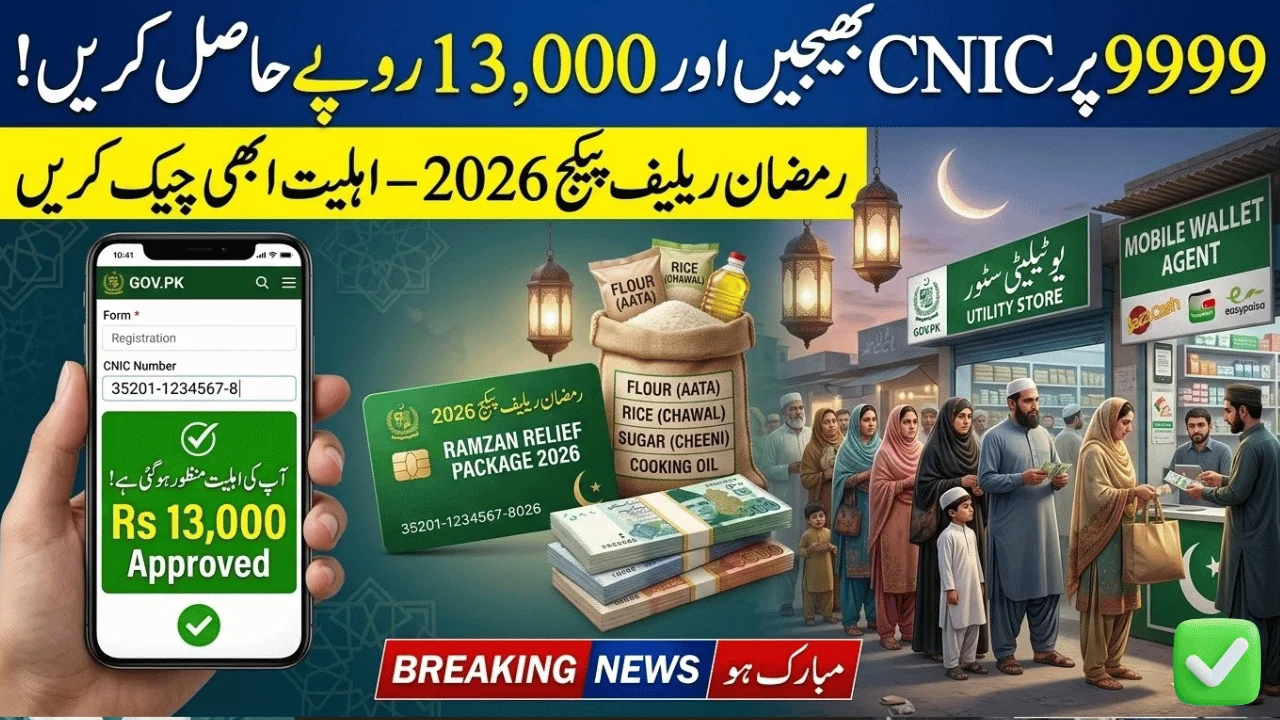
To address this issue, the Government of Pakistan introduced the Prime Minister Ramzan Relief Package 2026, a nationwide support initiative designed to help vulnerable families manage basic living costs. Through this program, eligible households may receive Rs. 13,000 in financial assistance.
One of the most important tools in this process is the 9999 PM Ramzan Relief Portal, a digital platform that allows citizens to verify their eligibility using their CNIC without visiting government offices.
This guide explains how the system works, who qualifies, how to check eligibility through the portal or SMS, and what to do if your application shows an error.
What Is the 9999 PM Ramzan Relief Portal?
The 9999 Ramzan Relief Portal is a digital verification system created to manage the distribution of financial assistance under the Prime Minister’s Ramadan relief initiative.
Instead of relying on manual registration or physical paperwork, the system connects multiple government databases to verify applicants instantly.
These databases may include:
-
National identity records
-
Socio-economic survey data
-
Welfare program registries
-
Poverty assessment databases
By using these data sources together, the government can identify households that genuinely require financial support.
Key Features of the Portal
| Feature | Details |
|---|---|
| Relief Amount | Rs. 13,000 |
| Verification Method | CNIC check |
| SMS Service | Send CNIC to 9999 |
| Portal Access | Online eligibility check |
| Registration Cost | Completely free |
| Target Group | Low-income households |
This digital system aims to reduce delays, prevent corruption, and simplify access to government assistance.
Why the Government Introduced the Digital Portal
In earlier welfare programs, people often had to visit local offices or distribution centers to check their eligibility. This created long queues, confusion, and sometimes misinformation.
The new digital verification system solves several of these problems.
Advantages of the Portal
-
Allows citizens to check eligibility from home
-
Reduces crowding at government offices
-
Improves transparency in welfare distribution
-
Helps authorities verify information instantly
For people living in rural areas or remote towns, the online portal can be particularly useful because all they need is a mobile phone with internet access.
How to Check Rs. 13,000 Eligibility Through the Portal
Checking your eligibility through the online portal is a simple process that usually takes less than a minute.
Step-by-Step Process
-
Open your mobile browser.
-
Visit the official Ramzan relief portal.
-
Enter your 13-digit CNIC number without dashes.
-
Complete the security captcha verification.
-
Click the Submit or Check Status button.
-
Wait for the system to display your eligibility result.
If your household qualifies, the portal will show confirmation along with further instructions regarding payment.
How to Check Eligibility Using the 9999 SMS Service
Not everyone has reliable internet access. To ensure that rural communities can still verify their status, the government introduced an SMS verification method.
How the SMS Method Works
-
Open the messaging app on your phone.
-
Type your 13-digit CNIC number without spaces or dashes.
-
Send the message to 9999.
-
Wait for a reply confirming your eligibility.

Most users receive a response within a few minutes.
This method is particularly helpful for people who:
-
Use basic mobile phones
-
Live in areas with limited internet connectivity
-
Prefer simple verification methods
Who Is Eligible for the Rs. 13,000 Ramzan Relief
The government designed the relief package to help families facing financial hardship.
Eligibility is determined through a combination of economic indicators and national database records.
Typical Eligible Groups
-
Low-income households
-
Daily wage workers
-
Families registered in welfare programs
-
Individuals with limited or irregular income
-
Households with high dependency ratios
The system automatically verifies applicants by cross-checking their CNIC against multiple databases.
Payment Distribution Methods
Once eligibility is confirmed, beneficiaries receive their financial assistance through several possible channels.
| Payment Method | How It Works |
|---|---|
| Bank Transfer | Sent directly to bank accounts linked with CNIC |
| Biometric ATM Withdrawal | Cash withdrawal using thumb verification |
| Mobile Wallets | Payment through digital wallet services |
| Retail Partner Shops | Cash collection at designated stores |
Applicants are usually notified through an official SMS before payments are released.
Common Problems When Checking Eligibility
Some users experience errors when verifying their status online. These problems are usually caused by technical issues or outdated information.

1. “Record Not Found” Message
This may occur if your household data is missing or still being updated in the system.
2. Expired CNIC
An expired identity card can prevent the system from verifying your identity.
3. Incorrect CNIC Entry
Typing the wrong number or including dashes can cause the portal to reject the request.
4. Recently Updated Data
If you recently updated information with NADRA, it may take some time for the system to refresh.
Practical Tips to Avoid Verification Problems
To improve your chances of successful verification, follow these simple guidelines:
-
Always enter your CNIC carefully.
-
Ensure your CNIC is valid and not expired.
-
Use the official portal only.
-
Keep your registered mobile number active.
These small steps can help avoid unnecessary delays.
Safety Guidelines to Protect Yourself From Scams
Whenever government relief programs are announced, scammers often attempt to exploit applicants by sending fake messages or links.
To stay safe, remember the following rules:
-
Government programs never charge registration fees.
-
Never share your OTP, PIN, or banking information.
-
Avoid clicking suspicious WhatsApp or social media links.
-
Verify information through official government platforms.

If someone asks for payment to “approve” your application, it is most likely a scam.
Pros and Cons of the Digital Relief System
Advantages
-
Faster verification process
-
Transparent distribution system
-
Easy access through mobile phones
-
Reduced need for physical visits
Possible Challenges
-
Limited internet access in remote areas
-
Data delays if records are outdated
-
Technical issues during high traffic periods
Despite these challenges, digital systems significantly improve efficiency in welfare programs.
Frequently Asked Questions (FAQs)
How much financial assistance is provided under the Ramzan relief package?
Eligible households may receive Rs. 13,000 as one-time financial support.
Is there any registration fee for the program?
No. The entire process is completely free.
Can I apply if I already receive other welfare benefits?
In many cases, people already registered in welfare programs may still qualify, depending on their financial status.
What should I do if the portal shows “Not Eligible”?
You can verify your household data or update your information through official channels if you believe there is an error.
How will I know when the payment is released?
Beneficiaries typically receive an official SMS notification with payment instructions.
Final Thoughts
The 9999 PM Ramzan Relief Portal 2026 represents an important step toward modernizing social welfare programs in Pakistan. By using digital verification systems and centralized databases, the government can distribute financial assistance more efficiently and transparently.
For families struggling with rising household costs, this program offers valuable support during Ramadan. Checking eligibility through the portal or SMS service is simple, quick, and accessible to most citizens.
If you plan to apply for the program, make sure your CNIC information is accurate, your mobile number is active, and you use only official platforms for verification. Taking these precautions can help ensure that deserving families receive the assistance they need during the holy month.
Latest Updates