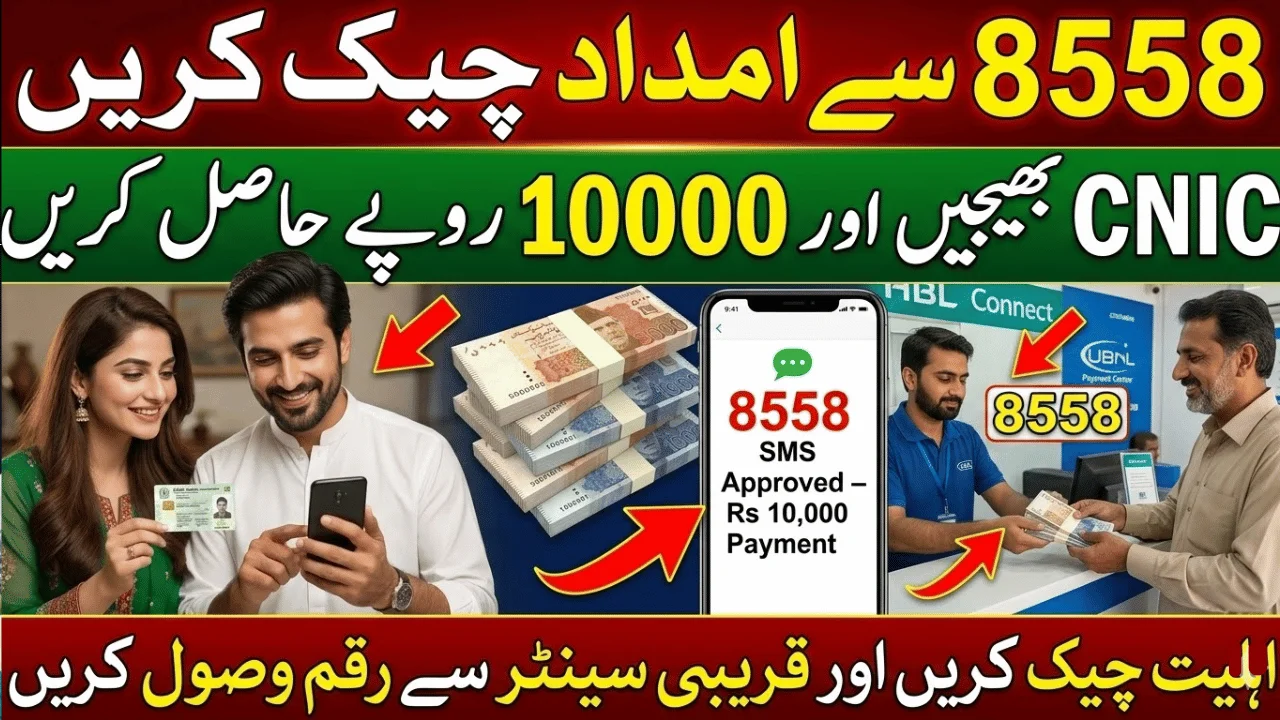
Across Pakistan, many families are searching for ways to confirm whether they qualify for new financial assistance programs announced in 2026. One topic that frequently appears in online searches is the 8558 CNIC relief check, which is often associated with Ramadan relief initiatives and family-based support programs.
For households struggling with rising living costs, even a small financial grant can make a meaningful difference. Programs connected to CNIC verification and SMS updates are designed to ensure that assistance reaches deserving families without unnecessary delays or middlemen.
This guide explains how the 8558 CNIC relief check works, eligibility requirements for married families, payment collection options, and practical steps to avoid common mistakes during verification.
Understanding the 8558 CNIC Relief System
The 8558 CNIC relief check refers to a verification method used in several assistance initiatives where citizens confirm eligibility using their national identity number.
Instead of complex application forms, these systems rely on existing government databases, such as poverty surveys and welfare registries.
Key Features of the System
| Feature | Details |
|---|---|
| Verification Method | CNIC-based eligibility check |
| Target Group | Low-income households |
| Payment Type | Cash assistance (varies by program) |
| Payment Channels | Digital wallets or agent centers |
| Database Sources | Welfare surveys and national records |
Because the process is linked to government records, verification can be completed quickly.
Why Many Relief Programs Focus on Married Families
Most financial assistance programs are designed around household income rather than individual income. This is why married families often appear in eligibility discussions.
When authorities assess eligibility, they typically review:
-
Household income levels
-
Family size
-
Employment status
-
Existing welfare program participation
A married household with multiple dependents may be considered a higher priority for support compared to individuals living alone.

Documents and Information Required Before Checking Eligibility
Before attempting an 8558 CNIC relief check, applicants should prepare a few basic documents.
Essential Requirements
| Requirement | Purpose |
|---|---|
| Valid CNIC | Identity verification |
| Registered SIM card | SMS confirmation |
| Updated household information | Database verification |
| Mobile wallet (optional) | Faster payment transfer |
Ensuring these details are accurate can prevent verification delays.
Step-by-Step Method to Check Eligibility
Although procedures vary slightly between programs, the general verification process is simple.
Basic Verification Steps
-
Open the official portal or verification app if available.
-
Enter your 13-digit CNIC number carefully.
-
Confirm your mobile number registered with your CNIC.
-
Submit the request for verification.
-
Wait for confirmation of eligibility.
Applicants may receive a message indicating:
-
Approved
-
Pending verification
-
Not eligible

If your data is still being reviewed, the system may update your status later.
How Financial Assistance Is Usually Distributed
Relief payments connected with CNIC verification are typically delivered through secure payment channels.
Payment Options
| Payment Method | Description |
|---|---|
| Digital Wallet | Funds sent to Easypaisa or JazzCash |
| Bank Agents | Withdraw through authorized service providers |
| CNIC Payment | Cash issued after biometric verification |
This flexible system allows beneficiaries to receive assistance even if they do not have a bank account.
Example: How CNIC-Based Relief Helps Families
Consider a married couple with three children living in a small town. The main earner works in a daily wage job with inconsistent income.
When their household qualifies for assistance through a CNIC-based relief program, the payment helps cover essential costs such as:
-
Grocery purchases for Ramadan
-
Utility bills
-
School supplies for children
Even limited financial support can improve stability for families during difficult economic periods.
Advantages of CNIC-Based Relief Programs
Government support programs that use CNIC verification provide several benefits.
Pros
-
Faster verification using national databases
-
Reduced corruption due to digital tracking

-
No need for lengthy paperwork
-
Accessible for people without bank accounts
These systems are becoming increasingly common as Pakistan expands digital welfare platforms.
Potential Challenges Applicants May Face
Although the system is efficient, some users may encounter problems.
Cons
-
Incorrect CNIC entry may cause verification failure
-
Heavy system traffic can slow down portals
-
Outdated survey data may affect eligibility
-
Some rural residents may have limited internet access
Most of these issues can be resolved by updating information in official records.
Common Mistakes During the Verification Process
Many applicants accidentally create delays by making small errors.
Frequent Problems
| Issue | Solution |
|---|---|
| Expired CNIC | Renew through NADRA |
| SIM not registered in applicant name | Update SIM registration |
| Wrong CNIC entry | Double-check digits |
| Missing survey data | Update household information |
Avoiding these mistakes helps ensure smooth verification.
Safety Tips to Avoid Fraud and Scams
Whenever government relief programs are announced, scammers often attempt to exploit public interest.

Important Safety Guidelines
-
Never share OTP codes with strangers
-
Do not pay anyone for “approval” or “fast processing”
-
Always use official portals or verified payment centers
-
Ignore suspicious social media messages claiming guaranteed eligibility
Government assistance programs do not require registration fees.
Frequently Asked Questions (FAQs)
What is the 8558 CNIC relief check?
It is a verification method used in some assistance programs where applicants confirm eligibility using their CNIC.
Who can benefit from these programs?
Low-income families, especially those registered in national welfare surveys.
Can married families apply?
Yes. Most programs evaluate eligibility based on household data.
How are payments delivered?
Payments may be transferred through digital wallets or collected from authorized agents after identity verification.
What if my status shows pending verification?
It means your information is still being reviewed. Checking again later may show updated results.
Conclusion
The 8558 CNIC relief check system represents a shift toward more transparent and efficient welfare programs in Pakistan. By using national databases and digital verification methods, authorities can identify deserving families more accurately and distribute financial assistance faster.
For married households struggling with rising expenses, these programs provide valuable support. To ensure a smooth process, applicants should keep their CNIC valid, SIM registration updated, and household survey information accurate.
As Pakistan continues expanding digital relief initiatives, systems based on CNIC verification and secure payment channels are expected to play an increasingly important role in supporting vulnerable communities.